
Category Archives: Politics

The Myth of Human Progress by Chris Hedges

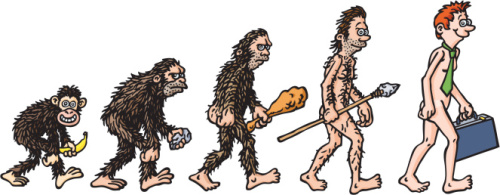
We must transcend our evolutionary history. We’re Ice Age hunters with a shave and a suit. We are not good long-term thinkers.
MythofHumanProgress

“If we fail in this great experiment, this experiment of apes becoming intelligent enough to take charge of their own destiny, nature will shrug and say it was fun for a while to let the apes run the laboratory, but in the end it was a bad idea.” ~ Ronald Wright, A Short History of Progress

Clive Hamilton in his Requiem for a Species: Why We Resist the Truth About Climate Change describes a dark relief that comes from accepting that “catastrophic climate change is virtually certain.” This obliteration of “false hopes,” he says, requires an intellectual knowledge and an emotional knowledge. The first is attainable. The second, because it means that those we love, including our children, are almost certainly doomed to insecurity, misery and suffering within a few decades, is much harder to acquire. To emotionally accept impending disaster, to attain the gut-level understanding that the power elite will not respond rationally to the devastation of the ecosystem, is as difficult to accept as our own mortality. The most daunting existential struggle of our time is to ingest this awful truth—intellectually and emotionally—and continue to resist the forces that are destroying us.

The human species, led by white Europeans and Euro-Americans, has been on a 500-year-long planetwide rampage of conquering, plundering, looting, exploiting and polluting the Earth—as well as killing the indigenous communities that stood in the way. But the game is up. The technical and scientific forces that created a life of unparalleled luxury—as well as unrivaled military and economic power—for the industrial elites are the forces that now doom us. The mania for ceaseless economic expansion and exploitation has become a curse, a death sentence. But even as our economic and environmental systems unravel, after the hottest year [2012] in the contiguous 48 states since record keeping began 107 years ago, we lack the emotional and intellectual creativity to shut down the engine of global capitalism. We have bound ourselves to a doomsday machine that grinds forward.

Complex civilizations have a bad habit of destroying themselves. Anthropologists including Joseph Tainter in The Collapse of Complex Societies, Charles L. Redman in Human Impact on Ancient Environments, and Ronald Wright in A Short History of Progress have laid out the familiar patterns that lead to systems breakdown. The difference this time is that when we go down the whole planet may go with us. There will, with this collapse, be no new lands left to exploit, no new civilizations to conquer, no new peoples to subjugate. The long struggle between the human species and the Earth will conclude with the remnants of the human species learning a painful lesson about unrestrained greed and self-worship.

“There is a pattern in the past of civilization after civilization wearing out its welcome from nature, overexploiting its environment, overexpanding, overpopulating,” Wright said when I reached him by phone at his home in British Columbia, Canada. “They tend to collapse quite soon after they reach their period of greatest magnificence and prosperity. That pattern holds good for a lot of societies, among them the Romans, the ancient Maya and the Sumerians of what is now southern Iraq. There are many other examples, including smaller-scale societies such as Easter Island. The very things that cause societies to prosper in the short run, especially new ways to exploit the environment such as the invention of irrigation, lead to disaster in the long run because of unforeseen complications. This is what I called in A Short History of Progress the ‘progress trap’. We have set in motion an industrial machine of such complexity and such dependence on expansion that we do not know how to make do with less or move to a steady state in terms of our demands on nature. We have failed to control human numbers. They have tripled in my lifetime. And the problem is made much worse by the widening gap between rich and poor, the upward concentration of wealth, which ensures there can never be enough to go around. The number of people in dire poverty today—about 2 billion—is greater than the world’s entire population in the early 1900s. That’s not progress.”

“If we continue to refuse to deal with things in an orderly and rational way, we will head into some sort of major catastrophe, sooner or later,” he said. “If we are lucky it will be big enough to wake us up worldwide but not big enough to wipe us out. That is the best we can hope for. We must transcend our evolutionary history. We’re Ice Age hunters with a shave and a suit. We are not good long-term thinkers. We would much rather gorge ourselves on dead mammoths by driving a herd over a cliff than figure out how to conserve the herd so it can feed us and our children forever. That is the transition our civilization has to make. And we’re not doing that.”

Wright, who in his dystopian novel A Scientific Romance paints a picture of a future world devastated by human stupidity, cites “entrenched political and economic interests” and a failure of the human imagination as the two biggest impediments to radical change. And all of us who use fossil fuels, who sustain ourselves through the formal economy, he says, are at fault.

Karl Marx and Adam Smith both pointed to the influx of wealth from the Americas as having made possible the Industrial Revolution and the start of modern capitalism. It was the rape of the Americas, Wright points out, that triggered the orgy of European expansion. The Industrial Revolution also equipped the Europeans with technologically advanced weapons systems, making further subjugation, plundering and expansion possible.

“The experience of a relatively easy 500 years of expansion and colonization, the constant taking over of new lands, led to the modern capitalist myth that you can expand forever,” Wright said. “It is an absurd myth. We live on this planet. We can’t leave it and go somewhere else. We have to bring our economies and demands on nature within natural limits, but we have had a 500-year run where Europeans, Euro-Americans and other colonists have overrun the world and taken it over. This 500-year run made it not only seem easy but normal. We believe things will always get bigger and better. We have to understand that this long period of expansion and prosperity was an anomaly. It has rarely happened in history and will never happen again. We have to readjust our entire civilization to live in a finite world. But we are not doing it, because we are carrying far too much baggage, too many mythical versions of deliberately distorted history and a deeply ingrained feeling that what being modern is all about is having more. This is what anthropologists call an ideological pathology, a self-destructive belief that causes societies to crash and burn. These societies go on doing things that are really stupid because they can’t change their way of thinking. And that is where we are.”

And as the collapse becomes palpable, if human history is any guide, we like past societies in distress will retreat into what anthropologists call “crisis cults.” The powerlessness we will feel in the face of ecological and economic chaos will unleash further collective delusions, such as fundamentalist belief in a god or gods who will come back to Earth and save us.

“Societies in collapse often fall prey to the belief that if certain rituals are performed all the bad stuff will go away,” Wright said. “There are many examples of that throughout history. In the past these crisis cults took hold among people who had been colonized, attacked and slaughtered by outsiders, who had lost control of their lives. They see in these rituals the ability to bring back the past world, which they look at as a kind of paradise. They seek to return to the way things were. Crisis cults spread rapidly among Native American societies in the 19th century, when the buffalo and the Indians were being slaughtered by repeating rifles and finally machine guns. People came to believe, as happened in the Ghost Dance, that if they did the right things the modern world that was intolerable—the barbed wire, the railways, the white man, the machine gun—would disappear.”

“We all have the same, basic psychological hard wiring,” Wright said. “It makes us quite bad at long-range planning and leads us to cling to irrational delusions when faced with a serious threat. Look at the extreme right’s belief that if government got out of the way, the lost paradise of the 1950s would return. Look at the way we are letting oil and gas exploration rip when we know that expanding the carbon economy is suicidal for our children and grandchildren. The results can already be felt. When it gets to the point where large parts of the Earth experience crop failure at the same time then we will have mass starvation and a breakdown in order. That is what lies ahead if we do not deal with climate change.”

“If we fail in this great experiment, this experiment of apes becoming intelligent enough to take charge of their own destiny, nature will shrug and say it was fun for a while to let the apes run the laboratory, but in the end it was a bad idea,” Wright said.

Chris Hedges, a columnist for Truthdig, began his career reporting the war in El Salvador. He spent nearly two decades as a foreign correspondent in Central America, the Middle East, Africa and the Balkans. He has reported from more than 50 countries and has worked for The Christian Science Monitor, National Public Radio, The Dallas Morning News and The New York Times, for which he was a foreign correspondent for 15 years. Reprinted with permission from TRUTHDIG, January 14, 2013, http://www.truthdig.com/report/item/the_myth_of_human_progress_20130113/.

Leave a comment

Filed under Climate, Culture, Leadership, Natural Resources, Politics, Population, Sustainability

Flying Pigs: Reality-Optional Economics and other Cockamamie Stories Infecting the Body Politic by James Howard Kunstler

It’s a tragic fact of history that sometimes societies lose their bearings.

It’s a tragic fact of history that sometimes societies lose their bearings.

The total tonnage of economic malarkey being shoveled over the American public these days would make the late Dr. Joseph Goebbels (Nazi Minister of “Public Enlightenment and Propaganda”) turn green in his grave with envy. It’s a staggering phenomenon because little about it is conspiratorial; rather, it’s the consensual expression of a public that wants desperately to believe things that are untrue, and an economic leadership equally credulous, unmanned, and avid to furnish the necessary narratives that might preserve their jobs and perks.

By “economic leadership” I mean the consortium of business executives, government officials, academic economists, and media disseminators—and even some bloggers and financial advisers. Some of the latter may be “talking their book,” since they may manage other people’s money and need those other people to believe in the soundness of markets, true or not. And some of the former may be motivated by the fear that even a little erosion of trust in the system could lead to a collapse of the system basted together by little more than blind faith in currencies and dubious “innovative” instruments. But most of these characters are mainly just flat-out delusional.

It’s a tragic fact of history that sometimes societies lose their bearings. They make terrible choices and bad things happen. It doesn’t have to take the form of a conspiracy, but rather a consensus—that is, a simple agreement between people in charge (and the public subject to their rule) about where that society will direct its priorities and make its investments. Proof of this was the behavior of national leaders and the public in the aftermath of the 2008 financial crash.

The system was hugely burdened by the debris of loans gone bad, a lot of it packaged into fraudulent bonds. The biggest banks in the nation were implicated in the creation of these frauds and left holding a lot of their own bad paper when the music stopped. Clearing the debris would have restored structural integrity to the banking system. Prosecuting financial criminals in the executive suites of the banks would have dis-incentivized racketeering and control fraud.

American leadership allowed neither restructuring nor prosecution. Banks (except for Lehman Brothers, the unloved “fall guy”) were not only prevented from failing, they were stuffed with taxpayer bailout money, plugged into a new Federal Reserve carry-trade racket (ZIRP), given a green light on unlimited accounting fraud (FASB 157), and allowed to continue their old rackets in new ways, e.g. the new bundled rental payment bonds, “covenant-lite” junk bonds, and new iterations of shady collateralized loan obligations. And, of course, not one bank executive was prosecuted (not to say jailed) for criminal shenanigans that cost the US economy $22 trillion according to the US General Accounting Office.

The public went along with all this to the degree that few of their political representatives were turned out of office, nor was any effective political resistance mounted besides two movements that proved to be weak and ineffectual: Occupy Wall Street and the Tea Party. (David Brat, who unseated House Majority Leader Eric Cantor in the recent Virginia primary, tried and failed to get backing from the Tea Party.) President Obama, who first campaigned on “hope and change” in the very moment when Wall Street blew itself up, and did absolutely nothing to change the racket-riddled banking system afterward, was rewarded with re-election in 2012. The obvious conclusion is that America, from top to bottom, didn’t want to restructure anything about our national life—and still doesn’t. It wants to stay stuck where it is in a very perilous moment of history, and it has enlisted a laundry list of fallacious beliefs to support its “do nothing” spirit.

Number One Fallacious Belief: The USA has unmatched exceptional entrepreneurial spirit.

It is in the interest of healthy adults to remain sane, even when the powerful matrix of society is going crazy around them. I don’t think you can overstate the capacity of societies to go crazy. We still marvel at the murderous cruelty of Germany and Russia in the mid-20th century, the sickening slide into industrial barbarism, and the technical proficiency they achieved in pursuit of their lunatic ends. And what provoked those terrible journeys into collective madness? Isn’t it part of the horror that no explanation seems to suffice. They were both losers in the First World War. Boo Hoo. Many societies sober up when they lose a war. Both opted for organized mass murder instead. Joseph Stalin summed up Russia’s collective psyche in that period when he said, “One death is a tragedy; a million deaths is a statistic.” The regime that promoted that particular view of the human condition lasted seventy years and then dissipated like a mere bad dream, an extremely fortunate outcome for Russia, and not so easy to account for, either.

And so what of US in this new century, faced with the gravely serious problems of resource scarcity, ecocide, climate uncertainty, demographic stress (overpopulation), cultural breakdown, and financial bedlam?

We are on the fast track to crisis until we prioritize truth over comfort.

From our friends at Peak Prosperity. For the entire article go to peakprosperity.com. July 9, 2014.

Leave a comment

Filed under Economy, Leadership, Politics, Sustainability

One Less Car on the Road by Jim Tull

Drivers—and their passengers—drive because the flow of our systems (a torrent really) compels us to drive.

She knew it would fit. And she knew me as well as anyone did. In big letters on the back, the T-shirt read ‘ONE LESS CAR ON THE ROAD’. A crusading environmentalist biking alone past hundreds of motor vehicles stuck in traffic, a moving billboard: ‘ONE LESS CAR ON THE ROAD’. With politeness and gratitude for the thought, I declined the gift.

I passed on the prospect of being hollered and honked at, or worse. Just adds to the peril. Deeper, though, the shirt and message presents a distorted picture of both the problem and the solution in the too-many-cars department. The underlying assumption is that individual behaviors are the problem, and that individual behavioral change is the solution. This assumption is okay, on one level, but of very limited use. Clearly and more specifically, the message implies that the environmental crisis is reducible to:
(a) the ignorance and/or insensitivity of car drivers (the problem); and
(b) “why don’t you park your SUV and get on a bike like me, nooneyhead?” (the solution).

I bike for many reasons. It supports good health, I’m out in the open, freer to experience the environment (sometimes ugly, sometimes beautiful) and wave to friends, who can see me. Parking is convenient. Biking is very energy efficient and very clean. It is also less expensive—or quicker—than car driving, depending on the unit of measurement: time or money. This rationale needs elaboration. I average around 12 miles per hour in the city. On average, a typical, single car owner travels somewhere between 4 and 9 mph on average when all the purchase and maintenance expenses associated with the car are converted to the owner’s time working a job to get the money. Then actually driving the car takes more time (and money and then more time). Pretty slow, all totaled.

And then there’s huge pollution and resource depletion costs, collectively incurred. Car driving isolates people. Roads divide communities, plaster the Earth, allow toxic water to run right into rivers. Over 30,000 Americans die each year from car accidents. Even wars and military preparedness expenses should be factored in (to protect precious oil). Very hazardous. If all car owners had to absorb all the collective costs as well as their personal car expenses, they’d find themselves driving in reverse most of the time. Though a good bicycle is expensive, the cost in money, converted to hours, to support my bike habit doesn’t even slow me down to 11 mph.

Despite all the good reasons to bike rather than drive, it’s wholly inadequate and dangerously beside the point to blame or lecture the drivers (especially since many cyclists like me drive plenty as well!). Our culture relentlessly conditions us to notice and prioritize individuals and institutions and to assume that the isolated behavior of these agents can explain our problems in full. Systems thinking, in contrast, looks between and around individuals, institutions and events for patterns of systemic behavior. Seeing and understanding systems and the power they have to shape and drive what we do can make individual behavior much more understandable and predictable. And also forgivable, if and when forgiveness is necessary or appropriate.

Drivers—and their passengers—drive because the flow of our systems (a torrent really) compels us to drive. Our economic system, structures and patterns require car driving in all but a few places. The shortage of reliable mass transit is part of this pressure, but the incentives to drive run much deeper: government subsidies to oil, infrastructure, and car companies; where we (have to) work; the work we do; the location of houses (especially suburbs) and the location of stores, especially food stores. The forces of globalization, though permitting many to work from home, also lure many to move unbikable distances. In the U.S. in particular, self-contained communities, walkable and bikable, are relics of a slower past.

By all powers, go ahead and bike. It’s better, on balance. The personal and collective benefits of one more cyclist on the road accrue with each convert. Good. But campaigning to get individuals to buck the systemic flow is an insufficient solution to our environmental or social crises. Changing the flow is a more promising alternative. We start with the reality that the vast, vast, vast majority of us more or less do what the other people around us are doing. Nearly every one of us are good at adding our bodies neatly to the end of a line of other lined-up people, even when it just seems to be heading in the direction we want. We herd well, go with the flow. Humans are often chided for our sheepishness. “If only we can break people out of the driving habit (and bike seventeen miles down a highway to work everyday), we’re so lazy!” OK, on one level, we are lazy and, it appears, becoming lazier. But there’s no changing people in this regard in any direct or immediate fashion. Maybe one or two, usually for short time periods. It’s not the laziness we have to account for as much as the conformity.

The brighter side of the conformity coin is that we are all just as likely to adopt positive habits as long as the systemic flow is with us and enough people have adopted. Create systems and structures that make walking and biking (or mass transit) the paths of least resistance for getting round, and ordinary people with the usual mix of virtues and vices will stop driving. Something close to this describes cities like Boston and New York, still choked with car traffic, but also filled with residents who don’t drive, for reasons of convenience more than holiness.

It’s difficult to overstate how disposed the people of our culture are to pick out individuals and institutions to blame for social problems—and also to solve them. The CEO of one of the biggest banks reportedly confessed in the wake of the ’08 crash that he was well aware that his bank’s reckless investment frenzy was pushing the economy to the brink, but that he couldn’t help participating in and thereby reinforcing the frenzy. His competitors were in it full tilt, his bank was raking in the green and anyway he would quickly be replaced if he applied the brakes. No excuse? Yes, on a personal level, no excuse. There is a box within which personal accountability is very real and very meaningful. But outside the box of personal ethics, the CEO—and the rest of us—were pawns of a systemic tragedy. Clearly, our economic system selects for greed, so acquisitive types are rewarded and rise to positions of power and wealth. Our economic system also must grow simply to maintain itself. Put these systemic features together and bubbles such as we experience (bigger these days, and more frequent) are highly predictable. The exponential growth of our money supply begged for all the accumulated dough to get busy somewhere, somehow, anywhere, anyhow. This systemic necessity compelled the invention of impenetrably complex and risky investment tools, lending money to anyone in any manner.

The “too much greed” chorus doesn’t cut very deeply into the crisis, looked at this way. Only slightly more systemic-minded are those who blame lax oversight and regulation. But given the pressure to grow and invest, the laxity itself was predictable. In a system, the parts self-organize, or dance with each other, to serve the aim of the system (like growth), and generally the parts choreograph themselves with remarkably little awareness of the total effect. Certainly, tighter oversight of investment practices and regulating policies would manage the frenzy some. But the fact is, as of this writing, the Federal Reserve is lending 2.8 billion each day of fresh new dollars into the economy to keep a recession from dropping down into depression. This suggests that solving the crisis will require more than policy change and firmer oversight.

****

The world is deeply indebted to Mahatma Gandhi for demonstrating the power of nonviolent resistance in overthrowing British rule in India. But his greater contribution to the social and ecological crises of both his day and ours is arguably his “Constructive Program”—his insistence on creating sustainable, local, very small scale economies. Many thinkers and doers since Gandhi (and before him) have developed theoretical frameworks and practical tools for redirecting the systemic flow that has been flushing us all into greater inequality, insecurity, and ecological ruin on a global level.

Clearly, failure to adequately redirect the current flow could spell the end of humanity in the near term, but the promise of the global ‘relocalization’ movement lies primarily in its systemic orientation. More precisely, this movement is more radical than prior liberation and libertarian movements because of how it contextualizes the essential roles large scale political and economic institutions play in sustaining the global industrial growth system. Yet relocalization is not ideological in any traditional sense. Old-fashioned, ancient, and indigenous wisdom and life skills are being worked into a variety of new experiments in community economics: small groups of people, bound to each other as equals and to their local geography, supporting each other to meet basic needs before selling their ‘comparative advantage’ surplus to the wider community or a network of communities.

For obvious reasons, relocalization is anything but a global, centralized movement. There is, for example, no unified rejection of large institutions or political regimes that might continue in some capacity to serve small communities and networks of communities. But the primary unit is the community, not the state or corporation. It does translate into a dramatic systemic shift in how we structure our lives. It will mean travelling less in general, and travelling shorter distances. And less driving.

Systems scientist Donella Meadows emphasized that the prime mover in systemic change is not the action itself of creating change, but the mindset, or paradigm, that powers and informs it. There is no way around changing minds to change systems. Public policy mandates forcing top down behavioral change that lasts can be effective mostly to the extent to which the coerced behavior becomes habit-forming and changes thinking over time. Upon seizing power in 1949, the communist regime in China outlawed the foot binding of women, among many other cultural practices deemed abusively archaic. Indeed, foot binding has stopped. States in the U.S. mandated recycling. Recycling is now considered de rigueur. Political revolutions and policy reforms change thinking through changing behavior, relying on coercion and good citizenship. Propaganda campaigns that accompany coercion, such as the DUI initiative in the U.S., reflect the need to change thinking to change behavior. It can work, but effective policy can never get too far ahead of popular culture, as the pathetic results of so many legal mandates such as alcohol and drug use prohibition demonstrate (In these instances, a culture of addiction pushes addictive behavior, the reality of personal decision-making and responsibility notwithstanding).

More deeply, the massive shift to relocalize is simply not likely to unfold in this way. And so far it hasn’t. Local government initiatives (notably in cities such as Copenhagen, San Francisco, Curitiba, Brazil, and Ogawamachi, Japan) have shown that government can play a vital role in re-empowering local, sustainable economies. Otherwise, thousands of conversations, starting with two people, have spawned thousands of promising alternatives to globalization worldwide that center on creating local, community-based economies. In my state of Rhode Island, there is a rapidly growing local food production and distribution system. Internationally, small groups of people have created over a thousand ‘Transition Initiatives’ to reclaim their own labor and local resources. In Auroville, India; Faoune, Senegal and many other communities around the world, communitarian eco-villages have experimented with localized alternatives to the global economy.

Relocalizing our personal and economic lives is an example of a systems thinking departure from the tendency to rely on comparatively unrealistic aspirations for either individual betterment at one end and government policy solutions at the other. Learning to see, understand and respect the power of systemic behavioral patterns and traps (once established, systems tend to generate their own behavior) amounts itself to a mindset change that enables structural innovations, including relocalization efforts. Additionally, relocalization recognizes that the global, industrial growth economy now with us is unreliable and unsustainable and must be displaced. Viable alternatives must answer to our deep human need to belong in community and connect to our land base. Our culture’s individualism is a bloated caricature of authentic individuality. Through relocalization we are connected to, not separate from or above, each other and the Earth.

As author Daniel Quinn insists, a change in cultural vision this deep has the power and know-how to transform systems, structures and behavior without programs, as we’ve come to know and rely on them. Still, most adopters of this change can and may grow into the evolving cultural vision as they settle into new living patterns carved out by others. Activists leading change need to recognize and appreciate that there is no shortcut around this deep complexity in building a just and sustainable world, but also that this ‘long haul’ approach may produce surprisingly quick results. In a world addicted to solitary motoring to get around, converting drivers one by one into cyclists will take much more time than we have.

Jim Tull is a teacher and social activist with 37 years of experience in confronting local, national and international social problems. For 15 years, including 12 as co-director, he worked at Amos House, a Catholic Worker-inspired hospitality house offering meals, shelter and social services to the poor and homeless in Providence. Since leaving Amos House in 1995, he has taught courses in Community Service and Social Change, Peace, Environmental and Global Studies and Philosophy at Providence College and the Community College of Rhode Island. He facilitates workshops and retreats on community building, cultural transformation and deep ecology.

3 Comments

Filed under Culture, Ecological Footprint, Economy, Energy, Environment, Politics, Sustainability

Top 10 Policies for a Steady-State Economy by Herman Daly

Well before reaching that radical biophysical limit, we are encountering the classical economic limit in which extra costs of growth become greater than the extra benefits, ushering in the era of uneconomic growth, whose very possibility is denied by the growthists.

Well before reaching that radical biophysical limit, we are encountering the classical economic limit in which extra costs of growth become greater than the extra benefits, ushering in the era of uneconomic growth, whose very possibility is denied by the growthists.

Let’s get specific. Here are ten policies for ending un-economic growth and moving to a steady-state economy. A steady-state economy is one that develops qualitatively (by improvement in science, technology, and ethics) without growing quantitatively in physical dimensions; it lives on a diet - a constant metabolic flow of resources from depletion to pollution (the entropic throughput) maintained at a level that is both sufficient for a good life and within the assimilative and regenerative capacities of the containing ecosystem.

Ten is an arbitrary number - just a way to get specific and challenge others to suggest improvements. Although the whole package here discussed fits together in the sense that some policies supplement and balance others, most of them could be adopted singly and gradually.

1. Cap-auction-trade systems for basic resources. Caps limit biophysical scale by quotas on depletion or pollution, whichever is more limiting. Auctioning the quotas captures scarcity rents for equitable redistribution. Trade allows efficient allocation to highest uses. This policy has the advantage of transparency. There is a limit to the amount and rate of depletion and pollution that the economy can be allowed to impose on the ecosystem. Caps are physical quotas, limits to the throughput of basic resources, especially fossil fuels. The quota usually should be applied at the input end because depletion is more spatially concentrated than pollution and hence easier to monitor. Also the higher price of basic resources will induce their more economical use at each upstream stage of production, as well as at the final stages of consumption and recycling. Ownership of the quotas is initially public - the government periodically auctions them to individuals and firms. There should be no “grandfathering” of quota rights to previous users, nor “offshoring” of quotas for new fossil fuel power plants in one by place by credits from planting trees somewhere else. Reforestation is a good policy on its own. It is too late for self-canceling half measures - increased carbon sequestration and decreased emissions are both needed. The auction revenues go to the treasury and are used to replace regressive taxes, such as the payroll tax, and to reduce income tax on the lowest incomes. Once purchased at auction the quotas can be freely bought and sold by third parties, just as can the resources whose rate of depletion they limit. The cap serves the goal of sustainable scale; the auction serves the goal of fair distribution; and trading allows efficient allocation - three goals, three policy instruments. Although mainly applied to nonrenewable resources, the same logic works for limiting the off-take from renewable resources, such as fisheries and forests, with the quota level set to approximate a sustainable yield.

2. Ecological tax reform. Shift the tax base from value added (labor and capital) to “that to which value is added,” namely the entropic throughput of resources extracted from nature (depletion), and returned to nature (pollution). Such a tax shift prices the scarce but previously un-priced contribution of nature. Value added to natural resources by labor and capital is something we want to encourage, so stop taxing it. Depletion and pollution are things we want to discourage, so tax them. Payment above necessary supply price is rent, unearned income, and most economists have long advocated taxing it, both for efficiency and equity reasons. Ecological tax reform can be an alternative or a supplement to cap-auction-trade systems.

3. Limit the range of inequality in income distribution with a minimum income and a maximum income. Without aggregate growth poverty reduction requires redistribution. Unlimited inequality is unfair; complete equality is also unfair. Seek fair limits to the range of inequality. The civil service, the military, and the university manage with a range of inequality of a factor of 15 or 20. Corporate America has a range of 500 or more. Many industrial nations are below 25. Could we not limit the range to, say, 100, and see how it works? This might mean a minimum of 20 thousand dollars and a maximum of two million. Is that not more than enough to give incentive for hard work and compensate real differences? People who have reached the limit could either work for nothing at the margin if they enjoy their work, or devote their extra time to hobbies or public service. The demand left unmet by those at the top will be filled by those who are below the maximum. A sense of community, necessary for democracy, is hard to maintain across the vast income differences current in the United States. Rich and poor separated by a factor of 500 have few experiences or interests in common, and are increasingly likely to engage in violent conflict.

4. Free up the length of the working day, week, and year - allow greater option for part-time or personal work. Full-time external employment for all is hard to provide without growth. Other industrial countries have much longer vacations and maternity leaves than the United States. For the classical economists the length of the working day was a key variable by which the worker (self-employed yeoman or artisan) balanced the marginal disutility of labor with the marginal utility of income and of leisure so as to maximize enjoyment of life. Under industrialism the length of the working day became a parameter rather than a variable (and for Karl Marx was the key determinant of the rate of exploitation). We need to make it more of a variable subject to choice by the worker. Milton Friedman wanted “freedom to choose” - OK, here is an important choice most of us are not allowed to make! And we should stop biasing the labor-leisure choice by advertising to stimulate more consumption and more labor to pay for it. At a minimum advertising should no longer be treated as a tax-deductible expense of production.

5. Re-regulate international commerce - move away from free trade, free capital mobility, and globalization. Cap-auction-trade, ecological tax reform, and other national measures that internalize environmental costs will raise prices and put us at a competitive disadvantage in international trade with countries that do not internalize costs. We should adopt compensating tariffs to protect, not inefficient firms, but efficient national policies of cost internalization from standards-lowering competition with foreign firms that are not required to pay the social and environmental costs they inflict. This “new protectionism” is very different from the “old protectionism” that was designed to protect a truly inefficient domestic firm from a more efficient foreign firm. The first rule of efficiency is “count all the costs” - not “free trade,” which coupled with free capital mobility leads to a standards-lowering competition to count as few costs as possible. Tariffs are also a good source of public revenue. This will run afoul of the World Trade Organization/World Bank/International Monetary Fund, so….

6. Downgrade the WTO/WB/IMF. Reform these organizations based on something like Keynes’s original plan for a multilateral payments clearing union, charging penalty rates on surplus as well as deficit balances with the union - seek balance on current account, and thereby avoid large foreign debts and capital account transfers. For example, under Keynes’s plan the U.S. would pay a penalty charge to the clearing union for its large deficit with the rest of the world, and China would also pay a similar penalty for its surplus. Both sides of the imbalance would be pressured to balance their current accounts by financial penalties, and if need be by exchange rate adjustments relative to the clearing account unit, called the “bancor” by Keynes. The bancor would also serve as the world reserve currency, a privilege that should not be enjoyed by any national currency, including the U.S. dollar. Reserve currency status for the dollar is a benefit to the U.S. - rather like a truckload of free heroin is a benefit to an addict. The bancor would be like gold under the gold standard, only you would not have to tear up the earth to dig it out. Alternatively a regime of freely fluctuating exchange rates is a viable possibility requiring less international cooperation.

7. Move away from fractional reserve banking toward a system of 100% reserve requirements. This would put control of the money supply and seigniorage (profit made by the issuer of fiat money) in the hands of the government rather than private banks, which would no longer be able to live the alchemist’s dream by creating money out of nothing and lending it at interest. All quasi-bank financial institutions should be brought under this rule, regulated as commercial banks subject to 100% reserve requirements. Banks would earn their profit by financial intermediation only, lending savers’ money for them (charging a loan rate higher than the rate paid to savings or “time-account” depositors) and charging for checking, safekeeping, and other services. With 100% reserves every dollar loaned to a borrower would be a dollar previously saved by a depositor (and not available to him during the period of the loan), thereby re-establishing the classical balance between abstinence and investment. With credit limited by prior saving (abstinence from consumption) there will be less lending and borrowing and it will be done more carefully - no more easy credit to finance the massive purchase of “assets” that are nothing but bets on dodgy debts. To make up for the decline in bank-created, interest-bearing money the government can pay some of its expenses by issuing more non-interest-bearing fiat money. However, it can only do this up to a strict limit imposed by inflation. If the government issues more money than the public voluntarily wants to hold, the public will trade it for goods, driving the price level up. As soon as the price index begins to rise the government must print less and tax more. Thus a policy of maintaining a constant price index would govern the internal value of the dollar. The Treasury would replace the Fed, and the target policy variables would be the money supply and the price index, not the interest rate. The external value of the dollar could be left to freely fluctuating exchange rates (or preferably to the rate against the bancor in Keynes’s clearing union).

8. Stop treating the scarce as if it were free, and the free as if it were scarce. Enclose the remaining open-access commons of rival natural capital (e.g., the atmosphere, the electromagnetic spectrum, and public lands) in public trusts, and price them by cap-auction-trade systems, or by taxes. At the same time, free from private enclosure and prices the non-rival commonwealth of knowledge and information. Knowledge, unlike the resource throughput, is not divided in the sharing, but multiplied. Once knowledge exists, the opportunity cost of sharing it is zero, and its allocative price should be zero. International development aid should more and more take the form of freely and actively shared knowledge, along with small grants, and less and less the form of large interest-bearing loans. Sharing knowledge costs little, does not create un-repayable debts, and increases the productivity of the truly rival and scarce factors of production. Patent monopolies (aka “intellectual property rights”) should be given for fewer “inventions,” and for fewer years. Costs of production of new knowledge should, more and more, be publicly financed and then the knowledge freely shared. Knowledge is a cumulative social product, and we have the discovery of the laws of thermodynamics, the double helix, polio vaccine, etc. without patent monopolies and royalties.

9. Stabilize population. Work toward a balance in which births plus in-migrants equals deaths plus out-migrants. This is controversial and difficult, but as a start contraception should be made available for voluntary use everywhere. And while each nation can debate whether it should accept many or few immigrants, and who should get priority, such a debate is rendered moot if immigration laws are not enforced. We should support voluntary family planning and enforcement of reasonable immigration laws, democratically enacted.

10. Reform national accounts - separate GDP into a cost account and a benefits account. Natural capital consumption and “regrettably necessary defensive expenditures” belong in the cost account. Compare costs and benefits of a growing throughput at the margin, and stop throughput growth when marginal costs equal marginal benefits. In addition to this objective approach, recognize the importance of the subjective studies that show that, beyond a threshold, further GDP growth does not increase self-evaluated happiness. Beyond a level already reached in many countries, GDP growth delivers no more happiness, but continues to generate depletion and pollution. At a minimum we must not just assume that GDP growth is economic growth, but prove that it is not uneconomic growth.

Currently these policies are beyond the pale politically. To the reader who has persevered this far, I thank you for your willing suspension of political disbelief. Only after a significant crash, a painful empirical demonstration of the failure of the growth economy, would this ten-fold program, or anything like it, stand a chance of being enacted.

To be sure, the conceptual change in vision from the norm of a growth economy to that of a steady-state economy is radical. Some of these proposals are rather technical and require more explanation and study. There is no escape from studying economics, even if, as Joan Robinson said, the main reason for it is to avoid being deceived by economists. Nevertheless, the policies required are far from revolutionary, and are subject to gradual application. For example, 100% reserve banking was advocated in the 1930s by the conservative Chicago School and can be approached gradually, the range of distributive inequality can be restricted gradually, caps can be adjusted gradually, etc. More importantly, these measures are based on the impeccably conservative institutions of private property and decentralized market allocation. The policies here advocated simply reaffirm forgotten pillars of those institutions, namely that: (1) private property loses its legitimacy if too unequally distributed; (2) markets lose their legitimacy if prices do not tell the truth about opportunity costs; and as we have more recently learned (3) the macro-economy becomes an absurdity if its scale is required to grow beyond the biophysical limits of the Earth.

Well before reaching that radical biophysical limit, we are encountering the classical economic limit in which extra costs of growth become greater than the extra benefits, ushering in the era of uneconomic growth, whose very possibility is denied by the growthists. The inequality of wealth distribution has canceled out the traditional virtues of private property by bestowing nearly all benefits of growth to the top 1%, while generously sharing the costs of growth with the poor. Gross inequality, plus monopolies, subsidies, tax loopholes, false accounting, cost-externalizing globalization, and financial fraud have made market prices nearly meaningless as measures of opportunity cost. For example, a policy of near zero interest rates (quantitative easing) to push growth and bail out big banks has eliminated the interest rate as a measure of the opportunity cost of capital, thereby crippling the efficiency of investment. Trying to maintain the present growth-based Ponzi system is far more unrealistic than moving to a steady-state economy by something like the policies here outlined. It is probably too late to avoid unrealism’s inevitable consequences. But while we are hunkered down and unemployed, enduring the crash, we might think about the principles that should guide reconstruction.

See: http://steadystate.org/top-10-policies-for-a-steady-state-economy/

2 Comments

Filed under Economy, Growth, Politics, Sustainability

The NSA, Planned Parenthood and Your Right to Privacy by Steven Conn

A crucial Constitutional conundrum: Is there a "right to privacy?"

A crucial Constitutional conundrum: Is there a “right to privacy?”

Not a week seems to go by without more revelations about how the NSA (or recently the UK’s GCHQ) monitors our electronic communications. Who knew that all the time I waste watching old movie clips on YouTube was so interesting to the guardians of our national security.

And not a week goes by it seems without some state legislature in some Republican-controlled state considering yet another bill to intrude on and harass women who need to get abortions. Indeed, to judge by the sheer number of such bills since 2011 you might conclude that women’s pregnancies constitute the biggest problem that the nation faces. There is apparently no need to regulate the financial industry, or toxic chemicals that spill into rivers or the shale drilling business, whose rail cars keep blowing up—those things will sort themselves out. But pregnant women gone wild … they’re the ones the state needs to restrict.

On the face of it these two phenomena don’t have much in common with each other. But they are, in fact, connected by a crucial Constitutional conundrum: Is there a “right to privacy?”

The privacy question has come up mostly in our discussions of the NSA and the new digital world we all inhabit. Beyond the problem of whether our surveillance laws, written during the age of rotary phones, are hopelessly outdated, we have discussed what kind of privacy any of us can now expect when virtually everything we do (or is that everything we virtually do?) leaves an electronic footprint.

But privacy, at least as a legal matter, is also at the center of the debate over abortion and family planning more broadly.

In the 1965 case “Griswold v. Connecticut” which overturned that state’s ban on the sale of contraceptives, the Supreme Court found that there was a basic right to privacy in the “penumbras” of the Constitution. Those “penumbras” included the 9th amendment’s language that “The enumeration in the Constitution, of certain rights, shall not be construed to deny or disparage others retained by the people,” and in the definition of personal liberty found in the 14th amendment.

That legal reasoning became the basis for the Court’s series of reproductive freedom decisions culminating in “Roe v. Wade” in 1973. It’s worth remembering that Justice Harry Blackmun, who wrote the Court’s majority opinion, had once served as legal counsel for the Mayo Clinic. For him, the privacy of the doctor-patient relationship was a paramount concern and he did not want states to interfere with that relationship.

Since those decisions, the so-called “Originalists”—those legal thinkers who believe the Constitution should only be read according to what the writers originally intended—have been howling. And they are, strictly speaking, right. There is no specific right to privacy in the Constitution—not like there is for speech and religious worship. If the right isn’t there in the text, so the Originalist reasoning goes, and if Congress has not passed a law defining such a right, then you don’t have it.

It is reasonable to assume that the founders never articulated this right, because it never occurred to them that it was necessary. They had a much more rigid separation between the “private” and the “public” than we do now, and they were primarily interested in defining the rules of the public realm. The Supreme Court in the 1960s and ’70s found a right to privacy in these contraception cases and in those penumbras, therefore, because they believed that by forcing itself into people’s bedrooms and doctor’s offices the state was violating a principle we had all simply taken for granted: we are entitled to privacy.

This issue might be easily resolved were we to add a” right to privacy” amendment to the Constitution, and there have been a handful of desultory attempts in that direction over the years. They haven’t amounted to much, nor are they likely to go anywhere precisely because of the abortion issue. Anti-abortion activists know full well that as soon as we all have a clear Constitutional guarantee of privacy, their ability to meddle in our private lives will evaporate.

The contested nature of our privacy rights presents a dilemma for those of us who want the NSA to stop eavesdropping on our cell phone calls too. If conservative judges are successful in eroding the right to privacy by allowing any number of humiliating restrictions on women trying to get abortions (of the sort issuing forth in red states right now), then it will be tougher for the rest of us to argue that our internet searches should be protected from government surveillance.

The revelations about the extent of NSA snooping have put the issue of our privacy on the front page. Those of us who care about reproductive rights have a political opportunity in this. For a generation the reproductive freedom movement has cast the issue as a matter of “choice.” That language resonates with our democratic ethos and our consumer culture. “Choice” is an American birthright, and so it should be.

But perhaps now feminists should start emphasizing the language of “privacy” more than we have in the past. In so doing, we can find common cause with those who want to defend our privacy in the electronic world as well. After all, the choices we make about our reproduction can only mean anything if they are made in the privacy of our bedrooms and doctors’ offices. Before we can protect choice, we need to defend privacy.

Source: http://www.huffingtonpost.com/steven-conn/the-nsa-planned-parenthoo_b_4886630.html

Leave a comment

Filed under Ethics, Family Planning, Politics, Women's Rights