Category Archives: Wildlife

In Praise of Wilderness and Moving Beyond Self by Howie Wolke

Wilderness is the ancestral home of all that we know in this world.

Wilderness is the ancestral home of all that we know in this world.

A few years ago, I led a group through the wilds of northern Alaska’s Brooks Range during the early autumn caribou migration. I think that if I had fourteen lifetimes I’d never again experience anything quite so primeval, so simple and rudimentary, and so utterly and uncompromisingly wild. If beauty is in the eye of the beholder, this beheld my eye above all else. Maybe that trek—in one of the ultimate terrestrial wildernesses remaining on Earth—is my personal quintessence of what constitutes real wilderness among a lifetime of wilderness experience. The tundra was a rainbow of autumn pelage. Fresh snow engulfed the peaks and periodically the valleys, too. Animals were everywhere, thousands of them, moving across valleys, through passes, over divides, atop ridges. Wolves chased caribou. A grizzly on a carcass temporarily blocked our route through a narrow pass. It was a week I’ll never forget, a week of an ancient world that elsewhere is rapidly receding into the frightening nature-deficit technophilia of the twenty-first century.

Some claim that wilderness is defined by our perception, which is shaped by our circumstance and experience. For example, one who has never been to the Brooks Range but instead has spent most of her life confined to big cities with little exposure to wild nature might consider a farm woodlot to be “wilderness.” Or a small state park laced with dirt roads. Or, for that matter, a cornfield, though this seems to stretch this theory of wilderness relativity to the point of obvious absurdity. According to this line of thought, wilderness, like beauty, is in the eye of the beholder.

Yet those who believe that perception defines wilderness are dead wrong. In our culture, wilderness is a very distinct and definable entity, and it can be viewed on two complementary levels. First, from a legal standpoint, the Wilderness Act of 1964 defines wilderness quite clearly. A designated wilderness area is defined as “untrammeled,” which means “unconfined” or “unrestricted.” It further says wilderness is “an area of undeveloped Federal land retaining its primeval character and influence, without permanent human improvements or habitation.” The law also generally prohibits road building and resource extraction such as logging and mining. Plus, it sets a general guideline of 5,000 acres as a minimum size for a wilderness. Furthermore, it banishes to non-wilderness lands all mechanized conveniences, from mountain bikes and game carts to noisy fume-belching all-terrain vehicles and snow machines.

In addition to wilderness as a legal entity, we also have a closely related cultural view, steeped in mystery and romance and influenced by our history, which yes, includes the hostile view of wilderness that was particularly prevalent during the early days of settlement. Today, our cultural view of wilderness is generally positive. This view is greatly influenced by the Wilderness Act, which means when people speak of wilderness in lieu of legal definitions, they speak of country that’s big, wild, and undeveloped, where nature rules. And that certainly isn’t a woodlot or cornfield. In summary, then, wilderness is wild nature with all her magic and unpredictability. It lacks roads, motors, pavement and structures, but comes loaded with unknown wonders and challenges that at least some humans increasingly crave in today’s increasingly controlled and confined world.

Untrammeled wilderness by definition comes with fire and insects, predator and prey, and the dynamic unpredictability of wild nature, existing in its own way in its own right, with utter disregard for human preference, convenience, and comfort. And perception. As the word’s etymological roots connote, wilderness is “self-willed land,” and the “home of wild beasts.”

It is also the ancestral home of all that we know in this world, and it spawned civilization, although I’m not convinced this is a good thing. So wilderness isn’t just any old unpaved undeveloped landscape. It isn’t merely a blank space on the map. For within that blank space might be all sorts of human malfeasance that have long since destroyed the essence of real wilderness: pipelines, power-lines, water diversions, overgrazed wastelands, and off-road vehicle scars, for example. No, wilderness isn’t merely a place that lacks development. It is unspoiled and primeval, a sacred place in its own right. Wilderness designation is a statement to all who would otherwise keep the industrial juggernaut rolling: Hands off! This place is special! Designated wilderness is supposed to be different “in contrast with those areas where man and his works dominate the landscape.” (Wilderness Act, section 2c)

Wilderness provides us with some defense against the collective disease of “landscape amnesia.” I began to use this term in the early 1990s while writing an educational tabloid on wilderness and roadless areas. It had begun to occur to me that, as we continue to tame nature, each ensuing generation becomes less aware of what constitutes a healthy landscape because so many components of the landscape gradually disappear. Like the proverbial frog in the pot of water slowly brought to a boil, society simply fails to notice until it’s too late, if it notices at all. For example, few alive today remember when extensive cottonwood floodplain forests were healthy and common throughout the West. So today’s generations view our currently depleted floodplains as “normal.” Thus there’s no impetus to restore the ecosystem. This principle applies to wilderness. Wilderness keeps at least some areas intact, wild and natural, for people to see. We don’t forget what we can still see with our own eyes. Moreover, when we keep wilderness wild, there is less danger that as a society we’ll succumb to wilderness amnesia, and forget what real wilderness is.

Perhaps the most important thing that sets wilderness apart is that real wilderness is dynamic, always in flux, never the same from one year or decade or century to the next, never stagnant, and entirely unconstrained despite unrelenting human efforts to control nearly everything. Natural processes such as wildfire, flood, predation, and native insects are (or should be) allowed to shape the wilderness landscape as they have throughout the eons. Remember, wilderness areas are wild and untrammeled, in contrast with areas dominated by humankind. That domination includes our interference with the natural forces and processes that shape a true wilderness landscape.

It has been said that wilderness cannot be created; it can only be protected where it still persists. There is some truth here, but there’s a big gray area too. Even though most new wilderness units are carved out of relatively unspoiled roadless areas, Congress is free to designate any area of federal land as wilderness, even lands that have been impacted by past human actions, such as logging and road building. In fact, Congress has designated such lands as wilderness on numerous occasions. Once designated, agencies are legally required by the Wilderness Act to manage such lands as wilderness. Time and the elements usually do the rest. For example, most wildernesses in the eastern U.S. were once heavily logged and laced with roads and skid trails. Today, they have re-attained a good measure of their former wildness.

Wilderness is about humility. It’s a statement that we don’t know it all and never will. In wilderness we are part of something much greater than our civilization and ourselves. It moves us beyond self, and that, I think, can lead only to good things.

Perhaps above all, wilderness is a statement that non-human life forms and the landscapes that support them have intrinsic value, just because they exist, independent of their multiple benefits to the human species. Most emphatically, wilderness is not primarily about recreation, although that’s certainly one of its many values. Nor is it about the “me first” attitude of those who view nature as a metaphorical pie to be divvied up among user groups. It’s about selflessness, about setting our egos aside and doing what’s best for the land. It’s about wholeness, not fragments. After all, wilderness areas—despite their problems—are still our healthiest landscapes with our cleanest waters, and they tend to support our healthiest wildlife populations, particularly for many species that have become rare or extirpated in places that are less wild.

Having made a living primarily as a wilderness guide/outfitter for over three decades, I’ve had the good fortune to experience many wild places throughout western North America and occasionally far beyond. Were I to boil what I’ve learned down to one succinct statement, it’d probably be this: Wilderness is about restraint. As Howard Zahniser stated, wilderness managers must be “guardians, not gardeners.” When in doubt, leave it alone. For if we fail to restrain our manipulative impulses in wilderness, where on Earth might we ever find untrammeled lands?

Finally, when we fail to protect, maintain, and restore real wilderness, we miss the chance to pass along to our children and grandchildren—and to future generations of non-human life—the irreplaceable wonders of a world that is too quickly becoming merely a dim memory of a far better time. Luckily, we still have the opportunity to both designate and properly protect a considerable chunk of the once enormous American wilderness. Let’s not squander that opportunity. We need to protect as much as possible. And let’s keep wilderness truly wild, for that, by definition, is what wilderness is, and no substitute will suffice.

Howie Wolke co-owns Big Wild Adventures, a wilderness backpack and canoe guide service based in Montana’s Paradise Valley, near Yellowstone National Park. He is an author and longtime wilderness advocate, and is a past president and current board member of Wilderness Watch. This piece was first published in “Wilderness: Reclaiming the Legacy” ©2011. Source: Keeping Wilderness WILD! The blog of Wilderness Watch http://wildernesswatch.wordpress.com

Leave a comment

Filed under Environment, Ethics, Natural Resources, Sustainability, Wildlife

Mourn for Martha by Richard Grossman

“You don’t know what you’ve got till its gone” — Joni Mitchell

The more people there are, and the more each of us consumes, the more species we unwittingly kill off.

The more people there are, and the more each of us consumes, the more species we unwittingly kill off.

Although the Ebola epidemic is terrible, there is an invisible epidemic that might end up being even worse for humanity. We depend on the great web of life, but paradoxically we are constantly weakening that web.

We receive services from many different biological species and communities. Plants remove carbon dioxide and harmful chemicals, purifying the air we breathe and liberating oxygen. Various invertebrate animals cleanse both salt and fresh water. Bees pollinate a quarter of our crops. The list goes on and on.

Unfortunately, we humans are causing animals and plants to go extinct at a terrible rate. There have been five prior eras of mass extinction—the most recent was 65 million years ago when a huge meteor plunged to Earth. The resulting explosion threw up dust that altered the climate for centuries, and ended most of then current life—including dinosaurs.

Scientists estimate that the current rate of extinction of species is about 1000 times normal. The causes of this epidemic include loss of habitat, climate change, introduction of exotic species and pollution. What do these have in common? They are all human-caused. The more people there are, and the more each of us consumes, the more species we unwittingly kill off.

The dodo is a classic example. It was a flightless bird that lived on the island of Mauritius. In the 17th century sailors stopped there to replenish food and water supplies. The dodo had no fear of humans and was an easy target—sailors could walk right up and club them for fresh meat. The last of these innocent animals was slaughtered before 1700.

Closer to home, the passenger pigeon filled the skies of North America in the 19th century. Their annual migrations were estimated to encompass several billion birds! They were easy prey for hunters; sometimes people brought them down simply by throwing sticks or rocks in the air. It was thought that the supply of this delicious meat would never end.

You probably already know the end of this story. The last passenger pigeon, “Martha”, died in the Cincinnati Zoo 100 years ago. Attempts to find a mate for Martha had been unsuccessful. Causes of the extinction were overhunting and loss of habitat, since much of the North American forest was being cut down and plowed. We now know that even if an amorous male had been found, the species still wouldn’t have been saved. Some species have complex social systems and require large numbers to survive. Passenger pigeons were gregarious—they needed huge flocks to breed successfully. Furthermore, from a genetic standpoint, diversity is important to prevent lethal mutations from gaining sway.

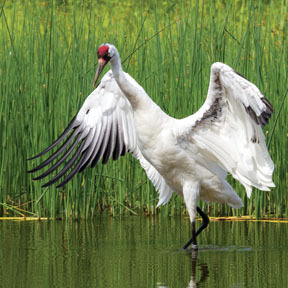
We are incredibly fortunate that two other species of birds—the California condor and the whooping crane—were saved from extinction before their numbers reached a critical low figure. There were just 23 whoopers alive in 1941 when protection and a captive breeding program saved the tallest of all American birds. Luckily, this small number of individuals must have had adequate genetic diversity to keep the species healthy, because now there are about 600 of these magnificent birds.

Why not splice some of Martha’s genetic material into the DNA of a related pigeon so the passenger pigeon species can be resurrected? Theoretically, “de-extinction” might be possible using modern genetics, but the concept has problems. Remember they need a huge flock to be sustainable. The major problem, however, is that de-extinction is a diversion from saving species from extermination in the first place. What we really need is the humility to share resources with other species.

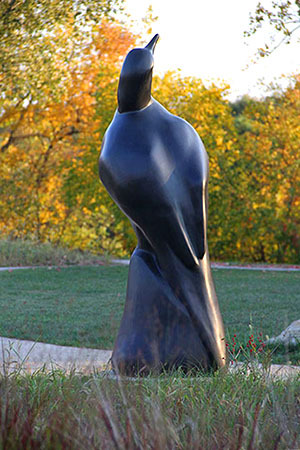
To commemorate the centennial of Martha’s final flight, the Smithsonian has established the multimedia program “Once There Were Billions”. Striking statues of passenger pigeons, part of The Lost Bird Project (www.lostbirdproject.org), are on display in Washington.

Bees are in trouble. Colony Collapse Disorder has devastated almost a third of honeybee colonies worldwide. Many native bees species are also being ravaged. What is causing this collapse? Research points to climate change (some flowers bloom before the insects are ready), harmful mites and a virus. In addition, omnipresent neonicotinoid insecticides—used by us—are killing bees.

Biological diversity is essential for human survival, yet, unthinkingly, we are rapidly destroying species in unprecedented numbers. We should safeguard the web of life, for our own species’ sake.

© Richard Grossman MD, 2014. Dr. Grossman practices obstetrics and gynecology in Durango, CO. For years he has written an award-winning column for the Durango Herald newspaper.

Leave a comment

Filed under Environment, Population, Sustainability, Wildlife

Species Extinction is a Great Moral Wrong by Philip Cafaro and Richard B. Primack

Sharing the Earth with other species is an important human responsibility.

“We need another and a wiser and perhaps a more mystical concept of animals. Remote from universal nature and living by complicated artiface, man in civilization surveys the creature through the glass of his knowledge ad sees thereby a feather magnified and the whole image in distortion. We patronize them for their incompleteness, for their tragic fate for having taken form so far below ourselves. And therein do we err. For the animal shall not be measured by man. In a world older and more complete than ours, they move finished and complete, gifted with the extension of the senses we have lost or never attained, living by voices we shall never hear. They are not brethren, they are not underlings: they are other nations, caught with ourselves in the net of life and time, fellow prisoners of the splendor and travail of the Earth.” —Henry Beston, author of The Outermost House

Nearly three decades ago, conservation biologist Michael Soulé published an article titled “What is Conservation Biology?” Its strong and enduring influence stemmed partly from Soulé’s success in articulating an appealing ethical vision for this new field. At its heart was the belief that the human-caused extinction of other species is a great moral wrong. “The diversity of organisms is good,” Soulé wrote, and “the untimely extinction of populations and species is bad.” Other species have “value in themselves,” he asserted—an “intrinsic value” that should motivate respect and restraint in our dealings with them.

In an article published in the journal BioScience titled “What is Conservation Science?” Peter Kareiva and Michelle Marvier attempt to update Soulé’s conservation philosophy, but lose sight of this moral commitment.

Specifying the ethical principles that they believe should guide conservationists, they give a prominent place to increasing human wealth and “working with corporations.” Recognition of the right of other species to continue to flourish is nowhere to be found. In fact, the article’s rhetoric serves to normalize extinctions and make readers more comfortable with them. For example, it describes concern for the local extinctions of wolves and grizzly bears in the United States as “nostalgia” for “the world as it once was” and suggests that people need not keep other species on the landscape when their continued presence is incompatible with our economic goals.

Unfortunately this position does not appear to be an aberration in this one article, but rather an essential part of the view that conservationists should accommodate ourselves to the new realities of the Anthropocene Epoch (so named due to the pervasive impact that human activities now have on Earth’s ecosystems).

An earlier essay that they published with Robert Lalasz, “Conservation in the Anthropocene,” also contemplates mass extinction with equanimity—because such extinctions will not necessarily change whole ecosystems or inconvenience human beings. There, the authors argue that: “… Ecologists and conservationists have grossly overstated the fragility of nature … In many circumstances, the demise of formerly abundant species can be inconsequential to ecosystem function. The American chestnut, once a dominant tree in eastern North America, has been extinguished by a foreign disease, yet the forest ecosystem is surprisingly unaffected. The passenger pigeon, once so abundant that its flocks darkened the sky, went extinct, along with countless other species—from the Steller’s sea cow to the dodo—with no catastrophic or even measurable effects.”

Presumably these extinction events were indeed catastrophic for the species in question! And also, perhaps, for other species that preyed on or otherwise interacted with them. But such catastrophes do not appear to count morally for the authors; they are not real catastrophes as long as the “ecosystem functions” that benefit humans remain intact. This is shortsighted. There is an extensive body of ecological research showing that even though there is often redundancy in biological communities, as species are lost, ecosystems start to lose functionality and become more prone to collapse. Leaving aside the scientific absurdity that some of the most abundant tree and bird species in North America could disappear with “no measurable effects,” there is an ethical blindness here that is even more troubling.

According to recent studies, humanity could extinguish one out of every three species on Earth during the next few centuries if we continue on our current habitat-destroying, resource-hogging path. In one sign of the times, in 2008, the U.S. Fish and Wildlife Service listed the polar bear as threatened with extinction due to the effects of global climate change. Those of us who love wild nature receive such news with lumps in our throats. Yet in response to this threat Kareiva, Marvier and Lalasz had this to say: “Even that classic symbol of fragility—the polar bear, seemingly stranded on a melting ice block—may have a good chance of surviving global warming if the changing environment continues to increase the populations and northern ranges of harbor seals and harp seals. Polar bears evolved from brown bears 200,000 years ago during a cooling period in Earth’s history, developing a highly specialized carnivorous diet focused on seals. Thus, the fate of polar bears depends on two opposing trends—the decline of sea ice and the potential increase of energy-rich prey. The history of life on Earth is of species evolving to take advantage of new environments only to be at risk when the environment changes again.”

Such a glib statement (“seemingly stranded on a melting ice block”) is both scientifically unjustified and morally obtuse. As Kierán Suckling, Executive Director of the Center for Biological Diversity, correctly points out, “no credible scientist believes that polar bears, who hunt from sea-ice platforms, will rapidly evolve to sustain themselves hunting harbor seals in open water.” And equating past extinctions due to natural causes with the possible extinction of the polar bear due to human-caused rapid climate change fails to acknowledge the human responsibility for this threat. Karieva and Marvier suggest that the polar bear’s fate depends on “two opposing trends” as “the environment changes,”—when it really depends on whether or not humanity substantially reduces our greenhouse gas emissions.

Extinguishing species through the continued expansion of human economic activities appears to be morally acceptable to too many, as long as this destruction does not harm people themselves. But this view is selfish and unjust. Human beings already control more than our fair share of Earth’s resources. If increased human population and economic demands threaten to extinguish the polar bear and many other species, then we need to limit our population and economic demands, not make excuses that will lead to greater ecological damage.

Conservation biologists, with our knowledge and appreciation of other species, are the last people who should be making excuses or making light of extinction.

A Matter of Justice, Not Economic Convenience

To be clear: We do not think there is anything wrong with people looking after our own legitimate needs. This is an important aspect of conservation. Kareiva and Marvier are right to remind us that protecting ecosystem services for human beings is important. They are right that concern for our own wellbeing can sometimes motivate significant biodiversity preservation. We believe that people should preserve other species both for their sakes and for ours.

But it is a mistake to reduce conservation solely to concern for our own well-being, or to assume that it is acceptable to extinguish species that do not benefit humans. Such an overly economistic approach to conservation leads us astray morally. It makes us selfish, which is the last thing we want when the very existence of so many other life forms is at stake. Fairly sharing the lands and waters of Earth with other species is primarily a matter of justice, not economic convenience.

Natural species are the primary expressions and repositories of organic nature’s order, creativity and diversity. They represent thousands of millions of years of evolution and achievement. They show incredible functional, organizational and behavioral complexity. Every species, like every person, is unique, with its own history and destiny. When humans take so many resources or degrade so much habitat that another species is driven extinct, we have taken or damaged too much and have brought a meaningful story to an untimely end.

At its core, the science of conservation biology affirms that knowledge about the living world should go hand in hand with love and respect for it. Biologist Colin Tudge put it well in his book The Variety of Life: “The prime motive of science is not to control the Universe but to appreciate it more fully. It is a huge privilege to live on Earth and to share it with so many goodly and fantastical creatures.”

From this perspective, even one human-caused extinction is one too many. From this perspective, the goodness of the human career on Earth depends as much on how well we appreciate and get along with other species as on how well we do so with other people.

Michael Soulé is right: other species have value in themselves and a right to continued existence. Human beings should preserve them whether or not it is convenient or economically beneficial for people.

Dr. Philip Cafaro, PhD is Professor of Philosophy at Colorado State University, an affiliated faculty member with CSU’s School of Global Environmental Sustainability and Book Review Editor of Elsevier’s Biological Conservation journal. His main research interests are in environmental ethics, consumption and population issues, and wild lands preservation. He is the author of Thoreau’s Living Ethics and Life on the Brink: Environmentalists Confront Overpopulation, among other books.

Dr. Richard B. Primack, PhD is Professor of Biology at Boston University and Editor-in-Chief of Biological Conservation, an Elsevier journal focusing on the protection of biodiversity. His research concerning the effects of climate change on the plants and animals of Massachusetts is the focus of a new book titled Walden Warming: Climate Change Comes to Thoreau’s Woods.

First posted on 12 February 2014 at: http://www.elsevier.com/connect/species-extinction-is-a-great-moral-wrong Reprinted with permission.

Leave a comment

Filed under Environment, Ethics, Sustainability, Wildlife

Majestic Whooping Cranes Face Uncertain Future by the David Suzuki Foundation

Despite the many years and millions of dollars dedicated to the recovery of the whooping crane, continued habitat degradation darkens its recovery horizon.

Despite the many years and millions of dollars dedicated to the recovery of the whooping crane, continued habitat degradation darkens its recovery horizon.

The whooping crane has long been the flagship of the conservation movement. The majestic bird—North America’s tallest—flies more than 8,000 kilometers each year, breeding in northern Alberta and wintering in marshes along the Texas coast. Still, its future remains uncertain.

Today we think of species becoming endangered when sprawling big box stores and subdivisions displace remnant natural areas within and around our cities or when large-scale industrial resource extraction fragments wilderness areas.

Whooping cranes have a longer history. In the late 1800s, Canadians began farming the prairies, expelling cranes from their breeding habitat. At the same time, Americans drained west coast marshes, where whooping cranes overwintered. Hunting also contributed to their decline.

North America was once home to more than 10,000 cranes. By 1938, the population reached an all-time low of 14 known adults.

In the early 1940s, the conservation movement leapt into action.

Over seventy years later, after significant breeding-area protection, captive breeding, aircraft-led migration and relocation efforts, the whooping crane has made a slow, often tenuous comeback.

Today there are several captive-bred and non-migratory populations, but only one—shared by the U.S. and Canada—that is self-sustaining and wild. That group breeds every year in Wood Buffalo National Park, which straddles the Northwest Territories and Alberta, and winters in Texas, flying about 4,000 kilometers each way. Although the population has been steadily increasing—there were 74 nests counted in Wood Buffalo National Park in 2013 and a few breeding pairs outside the park—it still faces a number of perilous risks in Texas and Alberta—not un-coincidently, the oil kings of North America.

Despite the many years and millions of dollars dedicated to the recovery of the whooping crane, continued habitat degradation darkens its recovery horizon. According to COSEWIC, Canada’s independent science assessment body of at-risk species, U.S. chemical spills are one of the biggest threats: “…the greatest concern is in the Gulf Intracoastal Waterway on the Texas coast. Numerous oil and gas wells and connecting pipelines are located in bay and upland sites near the cranes’ winter habitat, and many barges carrying dangerous, toxic chemicals travel the Gulf Intracoastal Waterway daily through Whooping Crane winter habitat. A spill or leak of these substances could contaminate or kill the cranes’ food supply or poison the cranes.”

Although the birds have a national protected area in Canada to breed, they still need to survive along their migration and stopover route—right over the Alberta tar sands. One of the most serious threats to the population is juvenile birds dying during their migration from Wood Buffalo to Texas. They risk landing in toxic tailings ponds, flying into power lines and exposure to water and air contaminated by the bitumen extraction process.

The fact that there is only one self-sustaining wild population of crane heightens the risk of a single, catastrophic event.

Crane recovery efforts cannot be done in isolation. National parks that protect Canadian breeding areas are important, but insufficient if the cranes can’t safely make their way back to Texas for their blue crab feast.

For the whooping crane—and for Canada’s over 300 other at-risk species—we need to find ways to maintain healthy, functioning ecosystems even where development occurs.

Source: Our friends at the David Suzuki Foundation – “solutions are in our nature”. <http://davidsuzuki.org/issues/wildlife-habitat/science/species-at-risk-act/majestic-whooping-crane-faces-uncertain-future/>

Leave a comment

Filed under Environment, Wildlife

Climate Change: Pacific Ocean Acidity Dissolving Shells of Key Species by Paul Rogers

What many people do not realize is that nearly a third of carbon dioxide emitted by humans is dissolved in the oceans. Some of that forms carbonic acid, which makes the ocean more corrosive.

What many people do not realize is that nearly a third of carbon dioxide emitted by humans is dissolved in the oceans. Some of that forms carbonic acid, which makes the ocean more corrosive.

In a troubling new discovery, scientists studying ocean waters off California, Oregon and Washington have found the first evidence that increasing acidity in the ocean is dissolving the shells of a key species of tiny sea creature at the base of the food chain. The animals, a type of free-floating marine snail known as pteropods, are an important food source for salmon, herring, mackerel and other fish in the Pacific Ocean. Those fish are eaten not only by millions of people every year, but also by a wide variety of other sea creatures, from whales to dolphins to sea lions.

If the trend continues, climate change scientists say, it will imperil the entire ocean environment.

“These are alarm bells,” said Nina Bednarsek, a scientist with the National Oceanic and Atmospheric Administration in Seattle who helped lead the research. “This study makes us understand that we have made an impact on the ocean environment to the extent where we can actually see the shells dissolving right now.”

Scientists from NOAA and Oregon State University found that in waters near the West Coast shoreline, 53 percent of the tiny floating snails had shells that were severely dissolving—double the estimate from 200 years ago. Until now, the impact on marine species from increasing ocean acidity because of climate change has been something that was tested in tanks in labs, but which was not considered an immediate concern such as forest fires and droughts.

The new study, published in the Proceedings of the Royal Society B, a scientific journal based in England, changes that. “The pteropods are like the canary in the coal mine. If this is affecting them, it is affecting everything in the ocean at some level,” said one of the nation’s top marine biologists, Steve Palumbi, director of Stanford University’s Hopkins Marine Station in Pacific Grove.

The vast majority of the world’s scientists—including those at NOAA, NASA, the National Academy of Sciences and the World Meteorological Organization—say the Earth’s temperature is rising because of humans burning fossil fuels like oil and coal.

But what many people do not realize is that nearly a third of carbon dioxide emitted by humans is dissolved in the oceans. Some of that forms carbonic acid, which makes the ocean more corrosive.

Over the past 200 years, the ocean’s acidity has risen by roughly 30 percent. At the present rate, it is on track to rise by 70 percent by 2050 from preindustrial levels. More acidic water can harm oysters, clams, corals and other species that have calcium carbonate shells. Generally speaking, increasing the acidity by 50 percent from current levels is enough to kill some marine species, tests in labs have shown.

If people reduce emissions of fossil fuels, cutting carbon dioxide levels in the decades ahead, the damage to the oceans can still be limited. “But if we keep on the emissions profile we have now, by 2100 the oceans will be so harmed it’s hard to imagine them coming back from that in anything less than thousands of years,” Palumbi said.

“We are in a century of choice,” he said. “We can choose the way we want it to go.”

Source: http://www.mercurynews.com/science/ci_25664175/climate-change-pacific-ocean-acidity-dissolving-shells-key

2 Comments

Filed under Climate, Environment, Water, Wildlife

Crowded Planet: A conversation with Alan Weisman by Andrew D. Blechman

Alan Weisman

Alan Weisman

Over the course of the past one hundred years, we humans have grown in population at a rate rarely seen outside of a petri dish. Alan Weisman, author of the best-selling The World Without Us, spent two years traveling to twenty nations to investigate what this population explosion means for our species as well as those we share the planet with—and, most importantly, what we can do about it. His latest book is Countdown: Our Last, Best Hope for a Future on Earth? Orion magazine editor Andrew D. Blechman met with Alan at his home in rural Massachusetts, amid birdsong and the patter of rainfall, to discuss some of the most serious issues ever to face the human species.

Andrew Blechman: Population is perhaps the monumental topic of our time, and yet the title of your book ends in a question mark. Why is that?

Alan Weisman: I’m a journalist, not an activist. I don’t make statements, but I try to find the answers to big, burning questions. This is the big one to me, because it addresses whether we’ll be able to continue as a species, given all the things that we have been doing to our home.

Andrew: The human population stayed relatively stable, or grew at a manageable rate, for tens of thousands of years but exploded in the past century. What happened? How did we humans come to dominate the planet so quickly?

Alan: The explosion began during the Industrial Revolution. Jobs were suddenly in cities rather than on farms. People were living in tight quarters, and that became an incentive for doctors to begin dealing with diseases that were starting to spread much more easily. Beginning with the nineteenth century, medical advances, such as the smallpox vaccination, were either eradicating diseases or controlling the pests that spread diseases. Suddenly, people were living longer, fewer infants were dying.
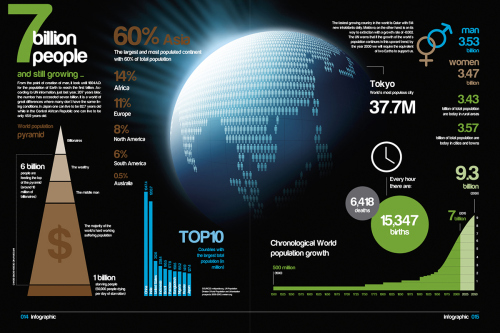
7 billion people and rising (click for full size graphic).  Courtesy of Infographic List: http://infographiclist.com/2012/03/21/7-billion-people-and-still-growing-infographic/

7 billion people and rising (click for full size graphic). Courtesy of Infographic List: http://infographiclist.com/2012/03/21/7-billion-people-and-still-growing-infographic/

Andrew: Before that, we were basically at a replacement rate?

Alan: Pretty much. Women would have seven or eight kids, and if they were lucky, two survived. Two is replacement rate. If a male and female have two kids, then they have essentially replaced themselves. Population remained stable because as many people were dying as were being born.

The other thing was that suddenly we learned how to produce far more food than nature could ever do on its own. Nature’s ability to produce plant life has always been limited by the amount of nitrogen that bacteria could pull out of the air and provide as food for plants. In the twentieth century, we discovered how to pull nitrogen out of the air artificially. As a result, we suddenly came up with artificial fertilizer that could produce much more plant life on this planet than had ever existed before. We were at about 2 billion in 1930 when we started using artificial nitrogen extensively. Today we’re at 7 billion. Between 40 and 50 percent of us would not be alive without artificial nitrogen fertilizer. It nearly doubled the food supply.

Andrew: They say that, in some ways, too much abundance isn’t actually good for a population, that it can actually stress it because it leads to overpopulation. For example, if you overfeed city pigeons, they have more babies and the population starts maxing out, whereas if you don’t overfeed them, the population keeps itself in check.

Alan: That’s the paradox of food production—it can ultimately undermine the viability of a population. At a certain point, it expands beyond its resource base, and then it crashes. Wildlife managers, for example, well know that if we don’t keep population in balance with food, a species can run into serious problems. They know that they can either relax controls on natural predators, or issue more permits to hunters—that is, human predators.

Andrew: What does it mean for the Earth to be full? For example, 350 parts per million has been identified as the concentration of carbon in the atmosphere beyond which we set in motion changes that will threaten the future of life as we know it. Is there a comparable figure for global population numbers?

Alan: That was one of the big questions that I set out to answer, or to try to see if it’s possible to answer: how many people can fit on the planet without tipping it over? It’s completely related to what we are doing. If we all lived an agrarian life, self-limitations would set in and our numbers wouldn’t grow much beyond our ability to grow our own food. However, if we are force-feeding our crops through chemistry, we can produce a lot more food, and a lot more of us, too. At a certain point, a downside kicks in to that.

But the answer to your question isn’t really known because we’re finding it out right now. We’re all part of a big experiment to see how many of us can live on this planet without doing something to it that is going to destabilize it so much that our own future is in jeopardy.

Andrew: Isn’t it almost impossible to predict the future, given how variables change? What if the population problem is self-correcting? After all, we’re no longer doubling, and many developed nations are experiencing population decline.

Alan: Some argue that population is in fact self-correcting, and that the correction is already underway. But it’s a little like saying a house fire is self-correcting, because it will eventually put itself out. Unfortunately the damage is done. One way or another, when a species exceeds its resource base, the population will come down. Nature does that in 100% of the cases in the history of biology. The question that I keep coming back to is, how soon is that going to happen?

Andrew: And will it be in time?

Alan: Exactly. If our population is coming down because nature is going to do it for us, well, it’s going to be, frankly, unpleasant to watch. When nature does in a horde of locusts because they eat themselves out of sustenance, it’s interesting for us to observe. When it happens to our own species, it’s not going to be very pretty.

So Many new consumers in Shanghai. Photo by Austronesian.

So Many new consumers in Shanghai. Photo by Austronesian.

Andrew: Is it the sheer number of people or is it the amount that we consume that matters, particularly in the so-called developed nations. Or is it simply that we live too long?

Alan: The answer to all of that is yes. All of those things are involved. I’m always curious about what people are thinking when they say, “It’s not population; it’s consumption.” Who do they think is doing all the consuming? The more consumers there are, consuming too much, the more consumption.

Andrew: And, as you mention in your book, there’s no condom for consumption.

Alan: I think, in the twentieth century, when our population quadrupled, we got to the point where we kind of redefined original sin. Just by being born, we’re part of the problem. There’s also no question that the most overpopulated country on Earth is actually the United States, because we consume at such a ferocious rate. We may not be as numerous as China or as India, but our total impact is huge.

That doesn’t mean that poor people in developing nations don’t have a severe impact on the environment. I was in Niger, which has the highest fertility rate on the planet now. Its average is around eight children per fertile female. In every village, I heard, “Had you been here twenty-five years ago, you couldn’t have seen that house over there for all the trees that we used to have.” Where did the trees go? Well, they needed them for firewood, and then the climate began changing and there’s less rain now. They’re not responsible for the industrial pollution that has gunked up the atmosphere, but when you take down trees, things change. You graze too many animals, and things really change. They’re now in chronic drought. In every village, hundreds of children have died.

What will ultimately carry the day in Niger is the dawning realization that they don’t have the luxury of continuing life as they used to live it, where men had multiple wives and wives had many children. And it’s not just in Niger, but many countries on the planet. Education seems to be the key. Any time you start to educate people, they start to put these things together, particularly if you educate women. Education is the best contraceptive of all.
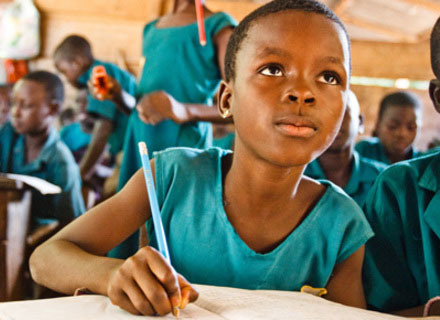
The more you educate women, the faster the birth rate drops. Photo courtesy of Development Diaries: http://developmentdiaries.com/ethiopia-angola-double-number-of-girls-in-school-in-10-years/

The more you educate women, the faster the birth rate drops. Photo courtesy of Development Diaries: http://developmentdiaries.com/ethiopia-angola-double-number-of-girls-in-school-in-10-years/

Andrew: That’s what I gather from your bookthe more you educate women, the faster the birth rate drops, and the quicker a population adopts a family-planning mentality.

Alan: It was one of the wonderful things about doing this book, which could otherwise have been very grim and sobering. I went to so many countries, twenty-one including all my travels around the United States. I saw human beings confronting some of the most difficult questions in our history. How are we going to survive? What are we doing to ourselves? Yet one of the easiest things that we can do that can make such a huge difference is one of these blessed win-win situations. You educate women, and give women rights that are equal to anybody else’s on this planet, and they generally choose to have fewer children, because they have another way to contribute to society that would be difficult if they had seven kids to care for.

Every place where you’ve got really educated women, you’ve got a society that is more and more livable. The more women decision makers we have, the better our chances. All we have to do is offer fair, equal opportunity to half the human race, the female half. This problem will start taking care of itself really, really quickly. A whole lot of environmental problems, within a couple generations, will also ease up because there’ll be a lot more space on this planet for other species.

Andrew: It’s amazing how flexible we can be as a species. Humans seem to adapt to having large families, and they seem to adapt just as easily to having very small families, even single children.

Alan: There’s a moment in the book with four hundred brilliant, animated students at Guangzhou University in China. Their parents or grandparents had been denied education in the Cultural Revolution and led limited lives. But these Chinese kids believe the twenty-first century is theirs. They’ve got education and incredible opportunities to do interesting work. The sky is the limit for them—but also literally, because they know that Guangzhou’s factory pollution hangs over their lives, and that it would be even worse if China hadn’t curbed its population.

Something occurred to me out of the blue. I asked my translator, a young woman in her twenties, “Hey, are they all only children?” She said, “Sure. We all are.”

Many people appalled by China’s one-child policy think it must be so unnatural not to have siblings. I asked these kids whether they missed having siblings. They admitted that yes, they did. But then they said, “On the other hand, our cousins have become our siblings. Sometimes our best friends have. We’ve reinvented the family.”

That, to me, was yet another example of the great flexibility of the human race, that we can make adjustments when we need to.

Andrew: Now that it’s entered its fourth decade, what other lessons can we learn from China’s massive social experiment with the one-child policy?

Alan: In one sense, the one-child policy has been successful—there would be 400 million more Chinese otherwise. And we’ve learned valuable lessons about population management, like the threat of discrimination, even lethal, against female babies.

We’ve also learned that while a draconian edict may have worked in one place, it’s not going to work everywhere. We have to take the culture of a country, a nation, a political system, a religious system, into account if we’re going to talk about managing population, which I think we have to do. Look, if we manage populations of predators and prey in parks because they have limits, we need to realize that we’ve now come to the limits of our planet. We occupy the whole thing—in a sense the Earth is now a park, it’s parkland. We live in it, and we have to manage it ourselves. There’s no way around that. Sure, maybe we can learn to consume less. But frankly, if we try to attack consumption to solve all of our problems, by the time we change human nature enough so that people consume a lot less, I think the Earth will be trashed in the meantime. So I think there are other things we have to do.

Andrew: It seems like contraception is a lot easier to encourage.

Alan: Yes, and it’s improving enormously. We’re no longer overloading women with estrogen the way that we used to. Even better, there are several male contraceptives that are becoming available that involve much simpler chemistry.

Andrew: As you’ve said, restricting the size of families through legislation is usually viewed with disdain. After all, for many, children represent hope, the future incarnate, and reproduction a fundamental human right, even a biological imperative. But can we really tackle global population without resorting to this sort of intervention?

Alan: I don’t think we need to legislate population management. What we need to do is make it very attractive to people, and let them manage their own population. I’ve got several examples in this book, big examples, of where this has worked brilliantly. There are a couple of Muslim nations that I refer to that have brought their populations down to replacement levels without draconian controls from above, without any edicts. They’ve done it through making family planning available, and making it available for free in one case, and also opening up the universities to women and encouraging them to get educated.

Andrew: Like Iran.

Alan: Like Iran, yes. Iran is the place that has had the most successful family-planning program in the history of the planet. They got down to replacement rate a year faster than China, and it was completely voluntary. The only thing that was obligatory in Iran was premarital counseling, which is actually a very nice idea. You could go to a mosque, or you could just go to a health center. They would talk about things to get you prepared for getting married, including what it costs to have a child, to raise a child, to educate a child.

Andrew: It’s interesting to hear about such a program being embraced by a theocracy. Do the world’s major religions generally differ when it comes to family planning, or do they share similar beliefs?

Alan: The Catholic Church is somewhat unique in its adamant opposition to birth control. Unless it’s the rhythm method, so-called natural methods of determining when to have sex that might lead to procreation or not, it’s simply unacceptable.

I went to the Vatican for my book. It’s a very curious place. It’s the smallest country on Earth, only 110 acres, and populated by just 1,000 people, virtually all of them old men. They’re making these rules that many Catholics outside its walls are paying no attention to. Italy and Spain, for example, have two of the lowest birth rates on the planet. That’s because women are using contraception.

Other religions argue within themselves on these issues. You find conflicting opinions in all three of the major monotheistic religions. In Evangelical Christianity in the United States, there has been an anti-abortion, even anti-contraception movement that’s very strident, restricting women’s access to the birth control of their choice. Yet I interviewed an Evangelical leader who absolutely supports contraception and campaigns hard for it. They’re citing the same Bible.

Andrew: When it comes to protecting species, how many can we save? Are we at the “Sophie’s Choice” moment of being forced to choose?

Alan: We really don’t know. We know that the extinction rate is accelerating very fast as our presence on this planet pushes other species off the edge. At a certain point, potentially, we could push something off the planet that we won’t know that we needed until it’s too late. There is a terrible dilemma for ecologists, particularly conservation biologists, who are trying to conserve enough biology to keep ecosystems viable, and that includes viable for Homo sapiens. We’re just another species in that ecosystem. It’s hard for them to know which ones to save. How do we decide? Could we even control it if we knew which ones?

Say there is a species out there that we depend on; let’s say for food. Everything we eat is the sum total of everything that it ate, and all the things that these things ate before they were eaten. We use the phrase “food chain” but that’s not really descriptive. Pretty much every animal species on land has to consume ten times its weight of other terrestrial species, including plant life, because only about 10% of what we consume converts to body mass. That means that everything that we eat has eaten ten times its weight. We’re at the apex of a very large pyramid. When you lose a species, or more than one, the whole pyramid starts to crumble.

For this book, I wanted to see how we might establish a more harmonious relationship with our species and the rest of nature, as opposed to the mortal combat that we find ourselves in. I wanted to know what the happy medium is, if there is one, a happy medium between a world without us and the one with us, which we’re currently overwhelming. When I started to look at what we are doing—the numbers were so boggling. I did some long division to make it more understandable. It came down to every four to four-and-a-half days, there’s a million more of us on the planet. That just doesn’t seem like a sustainable figure, and that’s pretty much where we are unless we start to do something about it.

Interestingly, some wildlife ecologists have started taking family planning into their own hands. In Uganda, for example, the country’s fabulous biodiversity, such as its gorillas, which tourists are willing to spend a lot of money to see, is getting chipped away by an unmitigated human population explosion. The ecologists began to realize that in order to preserve the wildlife, as well as the tourist-related income for the people who live in these areas, they needed to convince residents to have fewer children.

Andrew: What about the other side of the population coin? If you look at the European democracies, their birthrates are so low that they’ve resorted to paying their citizens to have children. For them, among other concerns, it’s about economics. How are economies such as theirs going to cope with shrinking populations? It seems like calibrating or recalibrating such a thing—trying to mesh just the right amount of people with just the right amount of economy—is a tough thing to do.

Alan: It’s a tremendously tough thing to do. We’ve never had to do it before. We’ve always had room to expand, or thought we had room to expand, until it turns out we were encroaching on other things that were really important to us. China kept expanding by just knocking down more and more forests, and then suddenly, they lost all their flood control. Now they’re trying to put the forests back.

We’ve never had to manage our population before, and our economies were always a reflection of our natural increase. All of our conventional determining factors for the health of the economy regard whether it’s growing. Bill Clinton even turned economic growth into a transitive verbWe have to ‘grow’ the economyas if we were planting seeds and watering them.

It turns out that population growth and economic growth is inextricable. For an economy to keep growing, you have to have growing populations, because you need more laborers to produce more products, and then you need more consumers for those products.

If we have to start limiting our population, then we’re going to have to come up with a way to redefine prosperity that doesn’t involve perpetual growth. A shrinking population or a stable population can’t be a perpetual-growth society.

Andrew: How will countries with declining populations care for all of their elderly?

Alan: It’s an oft-repeated fear that circulates in the business and economic world out there that an aging population is terrible for the world, because there’ll be all these unproductive people and there won’t be enough productive young people paying into the social welfare coffers to take care of them.

Yes, some countries have shrinking populations. But they’re not looking at a situation that goes on into perpetuity, in which they have far more older people than younger people. They’re looking at a generation or so of a bubble where they’re going to have more older people, and then, as that generation dies off, the number of older people and younger people are going to balance out again, and it’s not going to be a problem.

How do they economically get through those bubble years? As an American, I can think of an awful lot of things that my government is spending money on right now that if it dedicated those monies to taking care of a generation of older people until our population evened out, we’d be a much better society.

Andrew: I was really surprised by the fact that the future of the planet, in many ways, rests on whether women on average have a half child more or a half child less.

Alan: Those are pretty shocking numbers, and I got them from a couple of different demographers. By the middle of the century, our population will be nearly 10 billion. But that assumes that all the family planning programs we have in place will remain in place. And it’s a pretty fragile network, dependent on a few donor countries, the most important one being the United States. Had the last presidential election gone differently, the United States may well have withdrawn a great deal of its support for family planning programs all over the world.

If family planning does not keep up with our population growth, or, if suddenly, for whatever reason, the supply lines break down and birth control pills or whatever contraception they’re using is not available to women in a lot of places around the world, a half a child more per fertile woman means that by the end of the century we’re going to increase to 16 billion people. A half a child less per woman means that we’re going to be back down to 6 billion really quickly. Then we can decide at that point if we want to bring it down further. But the difference is, on average, half a child either way.

Andrew: As a species, we seem somehow hard-wired to have difficulty seeing beyond our immediate surroundings or thinking beyond the short term. If that’s the case, what do you think motivates humans to change their ways? What do you think is going to work in this instance? How do you convince a species to rein itself in?

Alan: If we could convince people that it’s in their own best interest to limit the number of children they haveto limit the size of their familiesthen we’ve got a fighting chance.

It turns out that having fewer kids helps virtually every family. You see billboards in countries all over the world—they’re kind of clichés at this point—with a woman surrounded by thirteen ragged children. Then you see a couple with only two kids, and they’re all dressed well. Everybody looks healthy. People get that message pretty quickly.

Andrew: After researching this topic so intensely, what gives you the most hope?

Alan: The fact that there is something so sensible, so wonderful, and with so many benefits that can alleviate the pressures that we human beings put on this planet and improve our own existence as humans-and that’s simply educating women.

If we give women all the opportunities that they deserve, they’re going to take care of this problem, and frankly, we’d have a much better society all the way around. That goes for any religion. That goes for any culture that I’ve ever visited. Any place where you run into women who are empowered, things improve. Everybody lives better, males and females. Women who are educated are going to have fewer children, and that gives me a great deal of hope.

In addition to that, making birth control available on a global level is also very doable. We’re not there yet in terms of distribution—nearly a quarter of a billion women who might use contraception don’t have access to it. However, it would only take about $8-9 billion a year to ensure that everybody did. It’s just not a lot of money on this planet, and it would have such a wonderful, multifaceted impact. We’d have fewer unwanted children. We’d have fewer abortions. We’d have happier people.

Best of all, none of this involves high technology. This does not involve coming up with renewable energygiven all of our best efforts, we still don’t know how to power all of our vehicles and all of our industries with just the sun or wind. This is technology that we already have. In fact, the education part of it employs the best of human technologyour own brainsto convey information and wisdom to our children. Those young brains can absorb it all, and get very creative with it, and do amazing things, as human beings are capable of doing.

Source: Orion magazine <http://www.orionmagazine.org/index.php/articles/article/7694> Reprinted with permission. Orion is an award-winning, non-profit, and ad-free publication. Anyone can request a free copy by going to <www.orionmagazine.org/freetrial>. Or you may subscribe for just $19 for 6 issues, nearly half off. An audio recording of the complete interview of Alan Weisman by Andrew Blechman is available at <www.orionmagazine.org/audio-video>.

1 Comment

Filed under Culture, Ecological Footprint, Environment, Natural Resources, Population, Sustainability, Wildlife

Ocean Damage ‘Is Worse Than Thought’ by Alex Kirby

Are we willing to give up fossil fuels to ensure live coral?

Are we willing to give up fossil fuels to ensure live coral?

A new report says the world’s oceans are changing faster than previously thought, which could have dire consequences for both human and marine life.

Marine scientists say the state of the world’s oceans is deteriorating more rapidly than anyone had realized, and is worse than that described in last month’s UN climate report from the Intergovernmental Panel on Climate Change (IPCC). They say the rate, speed and impacts of ocean change are greater, faster and more imminent than previously thought—and they expect summertime Arctic sea ice cover will have disappeared in around 25 years.

Their review, produced by the International Programme on the State of the Ocean (IPSO) and the International Union for the Conservation of Nature (IUCN) and published in the journal Marine Pollution Bulletin, agrees with the IPCC that the oceans are absorbing much of the warming caused by carbon dioxide and other greenhouse gases caused by human activity. But it says the impact of this warming, when combined with other stresses, is far graver than previous estimates. The stresses include decreasing oxygen levels caused by climate change and nitrogen run-off, other forms of chemical pollution, and serious overfishing.

Professor Alex Rogers of the University of Oxford, IPSO’s scientific director, says: “The health of the ocean is spiraling downwards far more rapidly than we had thought. We are seeing greater change, happening faster, and the effects are more imminent than previously anticipated.”

The IUCN’s Professor Dan Laffoley says: “What these latest reports make absolutely clear is that deferring action will increase costs in the future and lead to even greater, perhaps irreversible, losses.”

Or do we want only dead corals?

Or do we want only dead corals?

Damaged Mollusks Found

The review says there is growing evidence that the oceans are losing oxygen. Predictions for ocean oxygen content suggest a decline of between 1% and 7% by 2100. The loss is occurring in two ways: through the broad trend of decreasing oxygen levels in tropical oceans and areas of the North Pacific over the last 50 years, and because of the “dramatic” increase in coastal hypoxia (low oxygen) associated with eutrophication, when excessive nutrient levels cause blooms of algae and plankton. The first is caused by global warming, the second by increased nutrient runoff from agriculture and sewage. Both are a direct result of human numbers and activities.

The authors are also concerned about the growing acidity of the oceans, which means “extremely serious consequences for ocean life, and in turn for food and coastal protection”. The Global Ocean Commission reported recently that acidification would make up to half of the Arctic Ocean uninhabitable for shelled animals by 2050.

Professor Rogers told the Climate News Network: “At high latitudes pH levels are decreasing faster than anywhere else because water temperatures are lower, and the water is becoming more acidic. Last year, for the first time, molluscs called sea butterflies were caught with corroded shells.”

When atmospheric CO2 concentrations reach 450-500 parts per million (ppm) coral reefs will be eroded faster than they can grow, and some species will become extinct. Projections are for concentrations to reach that level by 2030-2050: in May they passed 400 ppm for the first time since measurements began in 1958.

Methane A Concern

With the ocean bearing the brunt of warming in the climate system, the review says, the impacts of continued warming until 2050 include reduced seasonal ice zones and increasing stratification of ocean layers, leading to oxygen depletion. It also expects increased releases from the Arctic seabed of methane, a greenhouse gas at least 20 times more effective than carbon dioxide in trapping heat in the atmosphere (the releases were not considered by the IPCC); and more low oxygen problems.

Another stress identified is overfishing. Contrary to claims, the review says, and despite some improvements, fisheries management is still failing to halt the decline of key species and damage to ecosystems. In 2012 the UN’s Food and Agriculture Organization said 70% of world fish populations were unsustainably exploited.

The scientists say world governments must urgently reduce global CO2 emissions to limit temperature rise to under 2°C—something which would mean limiting all greenhouse gas emissions to 450 ppm. They say current targets for carbon emission reductions are not enough to ensure coral reef survival and to counter other biological effects of acidification, especially as there is a time lag of several decades between atmospheric CO2 emissions and the detection of dissolved oceanic CO2.

Potential knock-on effects of climate change, such as methane release from melting permafrost, and coral dieback, mean the consequences for human and ocean life could be even worse than presently calculated. The scientists also urge better fisheries management and an effective global infrastructure for high seas governance.

Source: Climate News Network: http://www.climatenewsnetwork.net/2013/10/ocean-damage-is-worse-than-thought/

Leave a comment

Filed under Climate, Environment, Natural Resources, Wildlife